You Have to Touch AI Psychosis
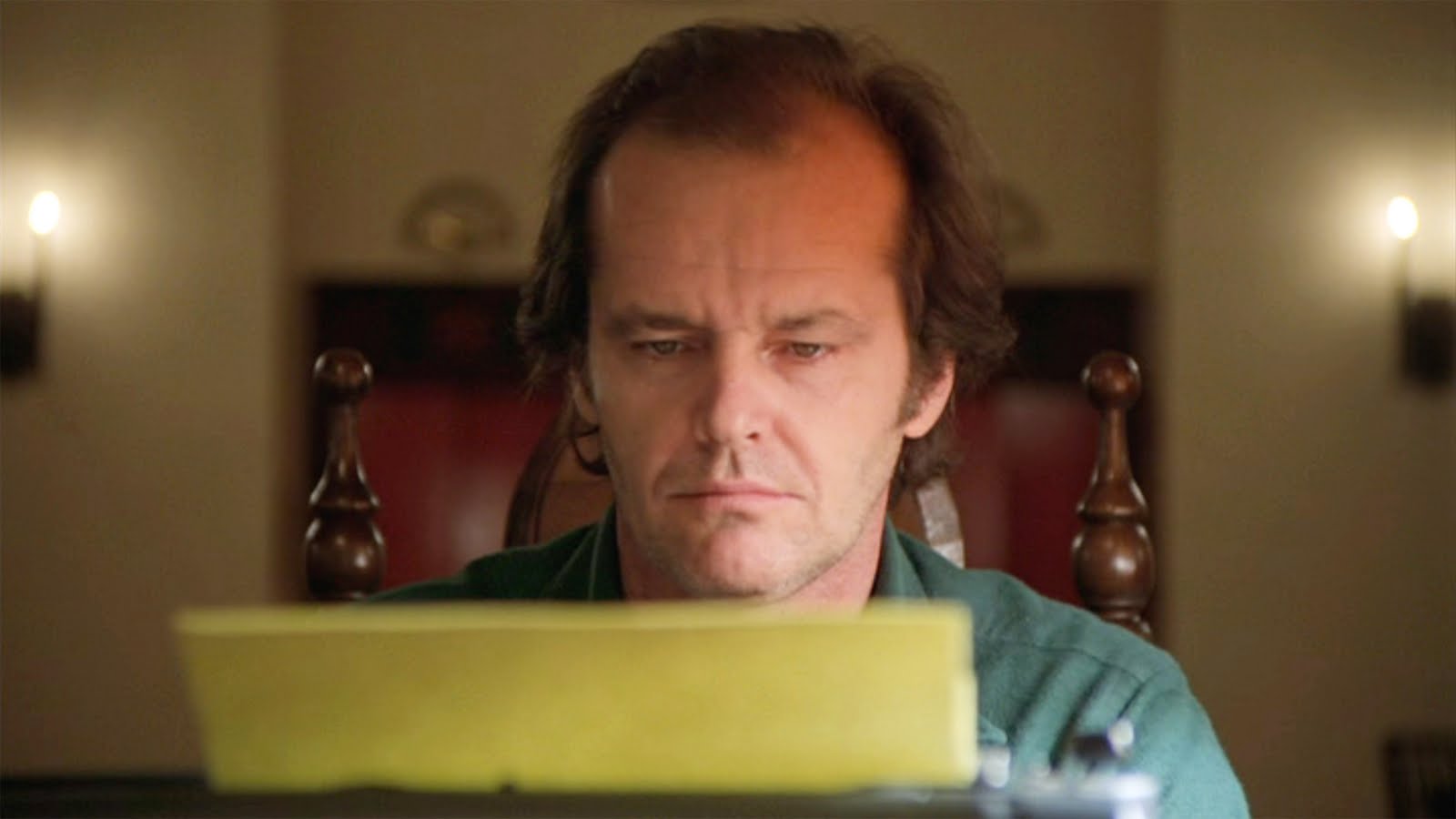
Still from The Shining (1980), dir. Stanley Kubrick.
Andrej Karpathy hasn’t handwritten a line of code since December. His ratio of typed-to-delegated went from 80/20 to 0/100 in a few months. Mitchell Hashimoto says entire companies are now in AI psychosis and can’t be reasoned with about it. Garry Tan told a SXSW crowd he’s sleeping four hours a night because he can’t put Claude Code down, and that a third of the CEOs he knows are the same. He called it “cyber psychosis.” (His assistant later told TechCrunch he was joking.)
Most of the commentary treats AI psychosis as a trap to avoid. I think it’s a stage you have to go through.
I mean two things by it, and they tend to arrive together.
The first is the slot machine. An agent finishes in 90 seconds and the dopamine arrives. You start chasing the feeling instead of the output. Every empty moment becomes a prompt-shaped craving. This is the half most people are already writing about.
The second is the deification. You start believing the model knows all. Anything is possible. Every wall is a skill issue on your part. You stop checking the work because checking implies the model might be wrong, and your working assumption is that it isn’t. You can talk yourself out of the slot machine. The deification is worse, because it wrecks your judgment and you don’t notice.
You don’t get truly AI-pilled by reading about either one. You get there by doing the embarrassing version first, watching it not quite work, and dragging yourself back one step. The people whose AI judgment I trust have a particular look in their eye, because they’ve been in.
The stages
Five stages. I’ve been through them all.
Skeptic. Won’t try it. Has 2023 evidence and a strong opinion. Their take is downstream of an old test on an old model with a bad prompt. I was never quite here. My version was practical, not ideological. I assumed the quality wasn’t high enough yet, and I was worried Google would penalise blog posts written with AI. So I dabbled when I should have been pushing harder.
Dabbler. Pastes into a chat window, gets a useful answer, marks the box as ticked. Their workflow hasn’t changed. Their org hasn’t changed. They tell themselves they’re “AI-pilled” because they used GPT to draft an email last Tuesday.
Convert. All in but still functional. The 40-hour week becomes a 60-hour week. You wake up at 2am to re-run an agent review of the feature you’re building, because the thought of waiting until morning is unbearable. You’ve stopped doing anything that isn’t agent-assisted. It looks like the best version of you from the outside, which is what makes it such a good on-ramp.
Psychosis. Both halves arrive at once. The slot machine and the deification. AI everywhere, every interface, every workflow, and a flat certainty that the agents are right because they’re agents. This is the stage everyone is rightly worried about, and the one nobody can talk you out of.
Pilled. Psychosis minus one step. Same intensity, sharper edges, with a working sense of what the model can’t quite do yet and what it gets wrong when nobody is watching. And you might bring in some semblance of work-life balance, though your partner is still sending you memes like this.
The fast path from dabbler to pilled runs through psychosis. There’s no shortcut, though there is a slower route. You can stay near the dabbler line for years, never go all the way in, slowly accumulate judgment from the edges, and eventually get to a version of pilled. You might. Probably not as fully. Definitely not as fast as someone who’s seen the depths. The dabblers who skipped both routes are the ones currently telling their teams how to use AI based on vibes.
What psychosis actually looks like
Everything on this list felt brilliant at the time. Some of it I’ve watched other people do, and some of it I’ve done:
- Shipping 50,000 words a day of PRDs that no human will physically consume.
- Refactoring all the things at once, in parallel, not because any of it is on the priority list, but because six agents finishing at the same time is the best dopamine hit in tech right now.
- Going agent-first on everything. Internal tools, customer touchpoints, hiring. Treating human interfaces as a transitional artifact and telling your engineers to design for agents reading the screen, not people.
- Building Moltbook, or being genuinely thrilled about Moltbook, or arguing in earnest that agents need their own social network so they can post to each other without humans in the loop. (It got acquired by Meta. The joke is on me.)
Each of those moves has a real idea in it, and none of them is the whole job. Each one, pushed to the limit on its own, is what Hashimoto means when he says you can’t have a rational conversation. You can’t, because the person doing it is correctly noticing a real piece of the future and incorrectly concluding the rest of the picture no longer applies.
The step back
Stepping back doesn’t mean slowing down. Nobody who’s been pilled goes back to a 2024 worldview where every meaningful task gets typed by hand. It’s one specific move: keep the velocity, drop the religion.
You keep shipping and building and using agents for everything they’re good at. What you stop doing is assuming the agent is right because it answered fast, or measuring yourself by how many parallel tasks you have running. You re-introduce the things you stripped out during psychosis: a human who reads the PRD, a teammate who pushes back on the refactor, a customer who tells you that no, they would not, in fact, enjoy chatting with three different agents to file an expense report.
For founders
If you’re a founder or a leader and you haven’t been through this, your team has, and they can tell. You don’t have to live there, but you do have to visit.
Build something only an agent can use. Ship a vibe-coded thing into production and triage what it costs you over the next 90 days. Spend a weekend trying not to write a sentence yourself. Read your own PRDs and notice when you stopped being able to tell which parts mattered.
The leaders I’ve met whose AI judgment holds up share one thing. They went too far in, once, and they remember what it felt like. They run their teams differently because of it. They make trade-offs that look unhinged to a dabbler and obvious to anyone who’s been in the same hole, and I don’t know a way to learn those trade-offs without going in yourself.